Paint Protection Film (PPF): The Ultimate Shield for Your Car
Why PPF is a premium investment rather than an expense — self-healing protection against rock chips, scratches, UV, and chemical damage.
Every supercar owner in Gauteng eventually faces the same two enemies: stone chips on the front end and UV damage on the bonnet. Wax can't stop either. Ceramic coating slows one and ignores the other. Paint Protection Film is the only finish on the market designed specifically to absorb both — and on a car worth seven figures, the maths is rarely close.
What Is Paint Protection Film?
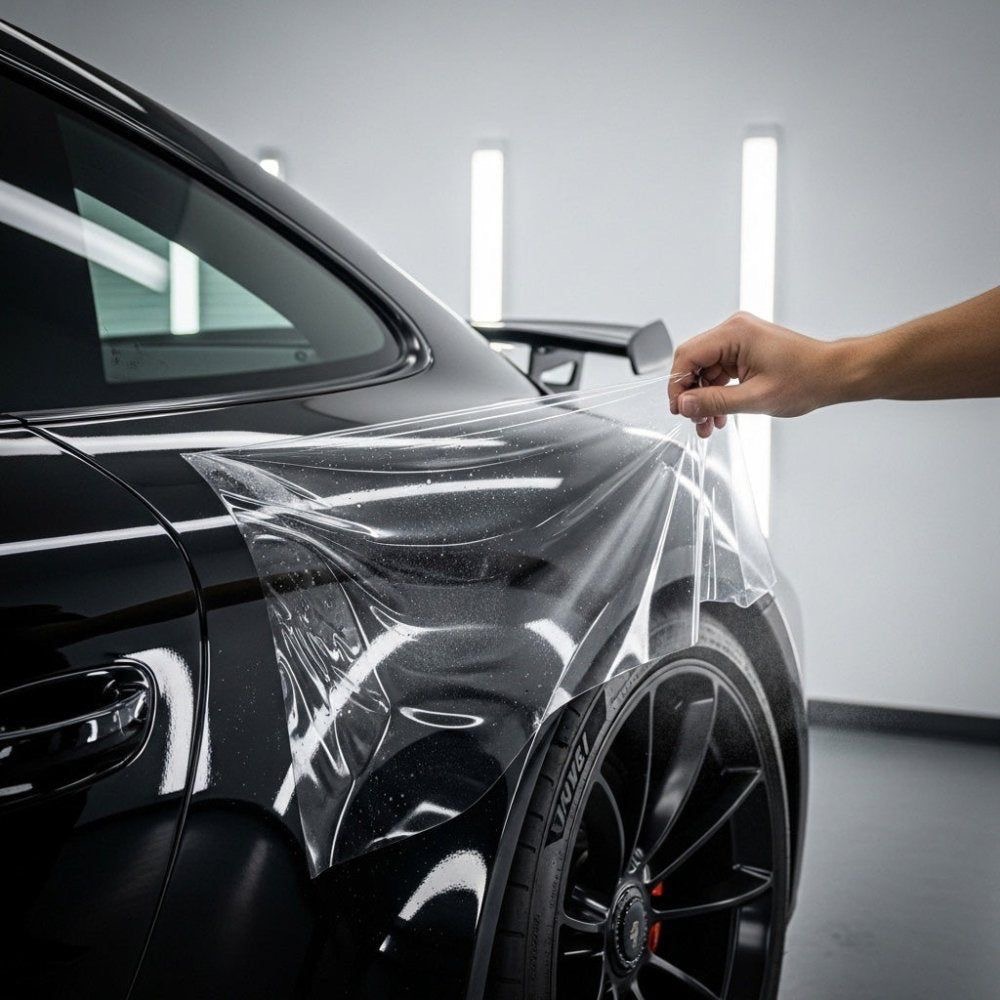
PPF is an optically clear, self-healing urethane sheet — roughly 200 microns thick — installed over your factory paint. Once fitted by a trained installer, it's almost invisible. What it does is absorb the impact, scratching, and chemical exposure your clear coat would otherwise take directly.
Think of it as an invisible shield: the paint underneath stays factory-fresh, while the film takes the abuse.
Key Benefits of PPF
- Self-healing surface. Light scratches and swirl marks disappear with heat — sunlight, warm water, or a heat gun activates the film's elastomeric layer and the marks lift out on their own.
- Rock-chip defence. The film absorbs impact from highway gravel, construction debris, and the chips that plague every front bumper on the N1.
- Chemical resistance. Bird droppings, tree sap, fuel spills, and acid rain from the East Rand industrial belt sit on the film, not the paint. Wipe them off without etching the clear coat.
- UV protection. Quality PPF blocks the high-altitude Gauteng UV that fades and oxidises uncoated paint within a few summers.
- Resale value preservation. Buyers of high-end cars check paint depth and originality. PPF keeps the factory finish intact underneath — when the film comes off years later, the paint is in better condition than an uncovered car of the same age.
- Optically clear. Modern PPF is invisible on a properly prepped panel. The colour, gloss, and depth of the paint show through unchanged.
Why Professional Installation Matters
PPF lives or dies on the install. A bad install lifts at the edges in six months, traps dirt, or shows visible seams under sunlight. A professional install:
- Uses computer-cut templates matched to your exact vehicle
- Wraps edges where possible so seams are hidden inside panel gaps
- Is done in a dust-free, climate-controlled bay so no contamination is trapped under the film
- Is backed by a warranty that covers yellowing, lifting, and delamination
The film itself only accounts for part of the cost. The rest is the prep, the skill, and the environment. Cheap PPF installs almost always cost more in the long run — either in re-installs or in damage to the paint underneath.
How PPF Compares to Other Protection
| Protection Type | Defence Against Chips | UV Protection | Lifespan |
|---|---|---|---|
| Wax / Sealant | None | Minimal | 6–8 weeks |
| Ceramic Coating | None | Strong | 2–5 years |
| Premium PPF | High (self-healing) | Strong | 5–10 years |
For most clients, the answer isn't either/or — it's PPF on impact zones (full front end, mirrors, A-pillars, rocker panels) with a ceramic coating layered over the top and over the rest of the body. You get rock-chip protection where it matters and the hydrophobic, easy-clean ceramic finish everywhere. Our bundled detailing packages pair the two at a fixed price.
The Bottom Line
PPF is the highest level of paint protection available. On a daily-driven exotic or a long-term keeper, it's not an expense — it's how you make the factory finish survive Gauteng. Book the install while the paint is still new, and the car will look the way it left the showroom five, seven, ten years from now.
Honest assessments, no upsell. We'll tell you exactly what your paint needs — and what it doesn't.
Book a Detail